
Every drink shows its ABV from the label  ·  New here? Start with a sampler

The Drinkery

Category: Guides

Plain-English guides to non-alcoholic drinks: labels, styles and how to serve them.

  • How to use non-alcoholic spirits (and why you should not drink them neat)

    How to use non-alcoholic spirits (and why you should not drink them neat)

    The first sip of a non-alcoholic spirit, poured neat, often disappoints. That is not a flaw in the bottle. Without alcohol, there is no burn, less body and a different way of carrying flavor. These drinks are made to be the base of something longer.

    Mix first, sip second

    Treat a non-alcoholic spirit as you would a cordial or a vermouth: something that adds flavor to a glass, rather than a drink on its own. Most makers print serving suggestions on the label, and they are worth following the first time.

    A simple starting point

    • Highball: one part spirit to three parts tonic or soda, over plenty of ice, with a strip of citrus peel.
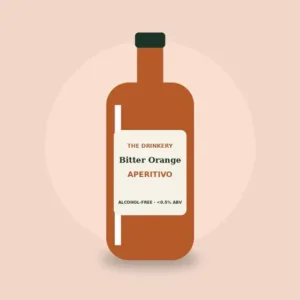
    • Spritz: a bitter aperitivo topped with soda or a sparkling non-alcoholic wine, with an orange slice.
    • Mule: a botanical or agave-style spirit with ginger soda and fresh lime.

    Adjust from there. If a drink tastes thin, use less mixer. If it tastes too bitter, add a little more soda or a squeeze of citrus.

    Store it like a mixer

    Many non-alcoholic spirits do not keep as long as their alcoholic counterparts once opened, because alcohol is a preservative. Check the label for storage instructions and a use-by window, and refrigerate after opening if the maker recommends it.

    Where to start

    If you are new to the category, a bitter aperitivo is the easiest place to start: it is meant to be lengthened with soda, so it tastes right from the first glass. Browse non-alcoholic spirits and aperitifs, pair them with something from our sodas and tonics, or read what “non-alcoholic” means on a label.
  • How to stock a non-alcoholic home bar

    How to stock a non-alcoholic home bar

    A good home bar is less about quantity than range. With a few bases, two or three mixers and a fruit bowl, you can make a drink for almost anyone who walks through the door, whether or not they are drinking alcohol.

    Start with two or three bases

    A base gives a drink its backbone. In a non-alcoholic bar, that usually means:

    • A bitter aperitivo for spritzes and long drinks with soda.
    • A botanical, gin-style spirit for anything you would normally make with gin and tonic.
    • A smoky or agave-style spirit for richer, slower drinks.

    Browse non-alcoholic spirits and aperitifs to compare styles.

    Add mixers with real flavor

    Mixers do more of the work in a non-alcoholic drink than in a classic cocktail, because the base is usually lighter. Keep a tonic, a ginger soda and a citrus soda in the fridge. Our sodas and tonics shelf is a good place to start.

    Keep a few things that need no mixing

    Not every evening calls for a shaker. A few non-alcoholic beers and a bottle of something sparkling, plus a box of canned mocktails, cover the nights when you just want to open something cold.

    The small things that matter

    • Ice. Plenty of it. Larger cubes melt more slowly and dilute the drink less.
    • Citrus. Lemons, limes and oranges for juice and peel.
    • Fresh herbs. Mint and rosemary add aroma to a simple soda.
    • The right glass. A drink served in a proper glass feels like an occasion.

    If you are not sure where to begin, a sampler or gift set lets you try several styles before you commit to a full case.

  • Non-alcoholic vs. alcohol-free: what the label actually means

    Non-alcoholic vs. alcohol-free: what the label actually means

    Pick up two cans in the same aisle and one may say “non-alcoholic” while the other says “alcohol-free.” Most shoppers read them as the same thing. Under US labeling rules they mean different things, and knowing the difference helps you buy the right drink for your situation.

    “Non-alcoholic” means less than 0.5% ABV

    In the United States, “non-alcoholic” is used for drinks that contain less than 0.5% alcohol by volume (ABV). For malt beverages such as non-alcoholic beer, federal rules from the Alcohol and Tobacco Tax and Trade Bureau (TTB) require the words “contains less than 0.5 percent (or .5%) alcohol by volume” to appear right next to the term on the label.

    That small amount usually comes from how the drink is made. Many non-alcoholic beers and wines are brewed or fermented as usual and then have the alcohol removed, which leaves a trace behind.

    “Alcohol-free” means none at all

    “Alcohol-free” is the stricter term. Both the TTB, for malt beverages, and the FDA, for products such as dealcoholized wine, treat it as a claim that the drink contains no alcohol. The FDA has said it does not consider “non-alcoholic” and “alcohol-free” to be synonymous.

    So a beer labeled 0.0% and “alcohol-free” and a beer labeled “non-alcoholic, contains less than 0.5% alcohol by volume” are making two different promises.

    How to read a label in practice

    • Look for the number, not just the word. The ABV figure is the most useful detail on the can or bottle.
    • 0.0% and “alcohol-free” means the maker states there is no alcohol.
    • “Non-alcoholic” with “less than 0.5%” means there may be a trace.
    • Not sure? Ask the maker, or ask us and we will check the label for you.

    Which should you choose?

    For most people who are cutting back or taking a break, a drink under 0.5% ABV fits the bill. If you avoid alcohol completely, for health, religious or personal reasons, look for drinks labeled 0.0% and “alcohol-free,” and check with your doctor if you have a medical reason to avoid alcohol.

    Every product page on The Drinkery Shop shows the ABV as printed on the label. Start with non-alcoholic beer and wine, or read how we choose what goes on our shelf.